

How Technology Is Changing Retail Recruitment

Retail has always moved quickly, and so has the way retailers find and hire their people. From AI-assisted screening to video interviews and data-driven hiring, technology is reshaping every stage of recruitment. For retailers and candidates alike, understanding these changes is the key to staying competitive in a tight talent market.

Faster, smarter sourcing

Digital job boards, social media and talent databases mean retailers can reach candidates faster than ever. Targeted advertising puts roles in front of the right people, and recruiters can quickly identify skilled candidates across regions. The speed is a major advantage, but it also means competition for good people is stronger. Employers who respond slowly lose out.

AI and automation in screening

Many organisations now use automated tools to sort applications, schedule interviews and answer common questions. Used well, this saves time and reduces admin so hiring managers can focus on people. Used poorly, it can overlook great candidates who do not fit a rigid filter. The best approach combines technology with human judgement.

Video interviews and virtual assessments

Video interviewing has become standard for first-stage screening, particularly for multi-site retailers. It cuts travel, speeds up decisions and gives candidates flexibility. Online assessments can also test customer service skills and cultural fit. Candidates should treat a video interview as seriously as a face-to-face one, with good lighting, a quiet space and the same preparation.

Data-driven decisions

Retailers are using data to forecast staffing needs, track time-to-hire and measure retention. This helps them plan ahead for peak trade and identify which sources deliver the best hires. Data is powerful, but it works best alongside strong relationships and a clear understanding of the market.

The human touch still wins

Retail is a people business. Customers want genuine service, and candidates want to feel valued during the hiring process. Technology should support that experience, not replace it. A quick, respectful and personal approach still wins great talent.

Is your hiring process future ready?

  • Can candidates apply easily on a mobile phone?
  • Do we respond to applicants within 48 hours?
  • Are our screening tools fair and reviewed by a person?
  • Do we use data to improve our hiring?
  • Does every candidate feel valued, even if unsuccessful?

The retailers that blend smart technology with a human approach will attract and keep the best people. Those who ignore it risk falling behind.

Want a modern, specialist approach to permanent retail hiring? Talk to the Retailworld team at www.retailworld.co.nz.

By RWR Group Marketing • November 10, 2026
A new starter's first fortnight shapes whether they stay for two years or two months. In retail, where trade never pauses for training, onboarding is often squeezed between deliveries and busy Saturdays. The good news is that a simple, consistent process makes a real difference to confidence, service quality and retention. Start before day one The experience begins the moment an offer is accepted. Send a short welcome message confirming the start time, dress code, parking or transport details and who they will meet first. Prepare their uniform, system logins and locker in advance. Nothing undermines a good hiring decision faster than a new starter standing at the counter while someone hunts for a password. Build the first week around real tasks Avoid the information dump. Spread the learning across the week: product knowledge, point of sale, service standards, safety and store routines. Mix short training sessions with supervised time on the floor so skills are practised straight away. Set clear, achievable goals for each day so the new starter knows exactly what good looks like. Assign a buddy, not just a manager A trusted buddy answers the small questions people hesitate to ask their manager. Choose someone who models your standards, enjoys helping others and has the time to do it properly. Give them a simple guide so the experience is consistent across shifts and stores. Recognise the role too, because buddies often become your future team leaders. Check in early and often Schedule conversations at the end of week one, at 30 days and at 90 days. Ask what is going well, what is confusing and what support they need. Early feedback lets you fix small issues before they become resignations, and it shows new starters that their voice matters from the start. Finally, remember that onboarding does not end when the induction does. New starters learn the unwritten rules of your store by watching how leaders behave, so be consistent about the standards you expect. Ask recent hires what they would change about their first fortnight and act on it. Retailers who treat onboarding as an ongoing project, rather than a one-off event, build teams that are more confident, more engaged and far more likely to stay. Your onboarding checklist Welcome message sent before day one Uniform, logins and equipment ready and waiting Written first-week plan shared with the new starter Buddy assigned and briefed Check-ins booked for week one, 30 days and 90 days Feedback gathered to improve the process each time Strong onboarding is not about big budgets. It is about being organised, welcoming and consistent, so every new team member feels set up to succeed. Looking for permanent retail talent who are ready to hit the ground running? Speak to the Retailworld team at www.retailworld.co.nz.
By RWR Group Marketing • October 28, 2026
You have accepted a new role and you are excited about what comes next. Now comes the part many people dread: telling your current employer. Resigning well protects your reputation, keeps relationships intact and sets you up for a smooth start in your new job. Retail is a connected industry, so how you leave is remembered. Check your contract first Before you say anything, read your employment agreement. Confirm your notice period, any conditions on leave, bonuses or commission, and any restraints or confidentiality clauses. Make sure your new offer is signed and all conditions, such as reference or background checks, are complete before you resign. Tell your manager first, in person Your direct manager should hear the news from you, not from a colleague. Book a private conversation, either in person or by video call. Keep it short, calm and positive. Say that you have accepted another opportunity, thank them for the experience, and confirm your last day. You do not need to share every detail about your new employer or role. Follow up in writing Provide a short, professional resignation letter or email straight after the conversation. Include your name, the date, your intended last day and a brief thank you. Keep it factual and avoid venting any frustrations. A clean paper trail protects you and your employer. Be prepared for a counter offer Your manager may try to keep you with a better offer. Decide beforehand how you will respond. Remember why you chose to leave, and be polite but firm if your decision is made. Thank them for the vote of confidence. Leave strongly Work out your notice with the same commitment you had on day one. In retail, that means keeping your store standards up, supporting the team through handover and finishing outstanding tasks. Offer to help train a replacement and document anything that others will need. Say goodbye to colleagues and customers with care. Your resignation checklist New offer signed and conditions cleared Notice period and entitlements confirmed Manager told in person first Resignation letter submitted Handover plan prepared Company property returned and final pay confirmed Positive goodbyes and contact details exchanged Resigning does not have to be awkward. With preparation and professionalism, you leave on good terms and take a strong reputation into your next chapter. Looking for your next permanent retail role? Speak to the Retailworld team at www.retailworld.co.nz.
October 13, 2026
Georgia from our Retailworld Auckland team has been named a finalist for Recruitment Consultant of the Year at the SEEK SARA Awards 2026. The SARAs recognise the best of the recruitment industry. To be named alongside the top consultants in the country is a huge achievement, and everyone at Retailworld is incredibly proud of her.
By RWR Group Marketing • October 7, 2026
Retail is often seen as a stepping stone, but for thousands of people it is a long, rewarding career with real progression. From the shop floor to head office, the skills you build in retail are valuable, transferable and in demand. If you are wondering where a career in retail can take you, here is a look at the path. Where it starts: sales and customer service Most retail careers begin as a sales assistant or customer service team member. This is where you learn product knowledge, build confidence with customers and understand how a store really works. Strong performers here are quickly noticed. Reliability, a positive attitude and a focus on customer experience are the foundations for every step that follows. Stepping into leadership The next steps are typically team leader, supervisor or assistant store manager. You start to look after rosters, coaching and daily trade results. This is a major shift from doing the work to leading others to do it. Building communication, decision-making and resilience at this level prepares you for greater responsibility. Store management and beyond As a store manager, you own the result: sales, people, stock, standards and culture. It is a commercial role that rewards strong leaders. From there, careers can grow into area or regional management, overseeing multiple locations and developing other managers. Many senior retail executives began their careers on the shop floor. Head office and specialist roles Retail also offers rich pathways beyond stores. Experience from the shop floor is highly valued in buying and merchandising, marketing, e-commerce, operations, supply chain, learning and development and HR. Customer insight gained in store gives you an edge in these areas. How to accelerate your progress Ask for feedback and act on it Learn the numbers behind your store Volunteer for projects and training Find a mentor who has done the role you want Keep your resume current with achievements and results Speak to a specialist recruiter about your goals Where do you see yourself in five years? Write it down, then work backwards to the skills and experience you need. A clear plan turns a job into a career. Retail rewards people who are curious, adaptable and driven. With the right support, you can build a career with variety, growth and genuine opportunity. Ready to take the next step in your retail career? Connect with the Retailworld team at www.retailworld.co.nz.
By RWR Group Marketing • September 30, 2026
Peak trade is the most important period of the retail calendar, and your team is the difference between a record result and a missed opportunity. Yet every year, retailers leave hiring to the last minute and pay for it in lost sales, stretched staff and rushed decisions. Here are the most common recruitment mistakes to avoid as peak season approaches. Starting too late The best candidates are not waiting around in November. Great retail talent is often secured weeks earlier. Starting your search now gives you time to interview properly, check references and onboard your new hires before the rush begins. Late hiring means fewer options and a higher chance of compromising on quality. Hiring only to fill a gap When pressure is high, it is tempting to hire the first available person. But a poor hire costs far more than a short delay. Define the skills and attitude you need: customer focus, resilience, reliability and teamwork. Hire people who can perform under pressure, not just people who can start on Monday. Skipping the onboarding New starters who are thrown straight onto the floor without training struggle, make mistakes and often leave. Plan a clear induction covering product knowledge, systems, service standards and safety. Pair new team members with an experienced buddy. Good onboarding improves confidence, service quality and retention well beyond the season. Ignoring the permanent pipeline Peak season is a chance to find your next store manager, assistant manager or sales leader. Watch for standout performers and have a plan to develop them. Building a strong permanent team before the rush reduces your reliance on constant rehiring and protects your culture. Overlooking your current team Burnt-out staff are the biggest risk to peak trade. Check in on workloads, rosters and morale before the season starts. Recognise effort and communicate early about expectations. Retaining a great team member is always cheaper than replacing one. Your peak season hiring checklist Have we forecast headcount by store and by week? Are our job ads and interview questions ready? Have we set a hiring deadline well before trade begins? Is the induction and training plan locked in? Do we have a plan to retain and reward our current team? Have we identified future leaders among our team? A little planning now will make peak trade smoother, more profitable and far less stressful. The retailers who win this season are the ones who prepared early and hired well. Need permanent retail talent in place before peak season? Speak to the Retailworld team at www.retailworld.co.nz.
By RWR Group Marketing • September 27, 2026
You have years of retail leadership under your belt, a solid track record of hitting sales targets and team management experience to back it up. Yet, your application inbox remains quiet. In today's competitive Australian and New Zealand retail landscape, a standard CV will not cut it. Your resume needs to communica
By RWR Group Marketing • September 23, 2026
Taking the next step in your retail career is a major decision. In a fast-moving Australian and New Zealand retail landscape, accepting the wrong position can derail your professional trajectory, while choosing the right role accelerates your growth and commercial impact.
By RWR Group Marketing • September 20, 2026
By RWR Group Marketing 
By RWR Group Marketing • September 19, 2026
By RWR Group Marketing 
By RWR Group Marketing • August 24, 2026
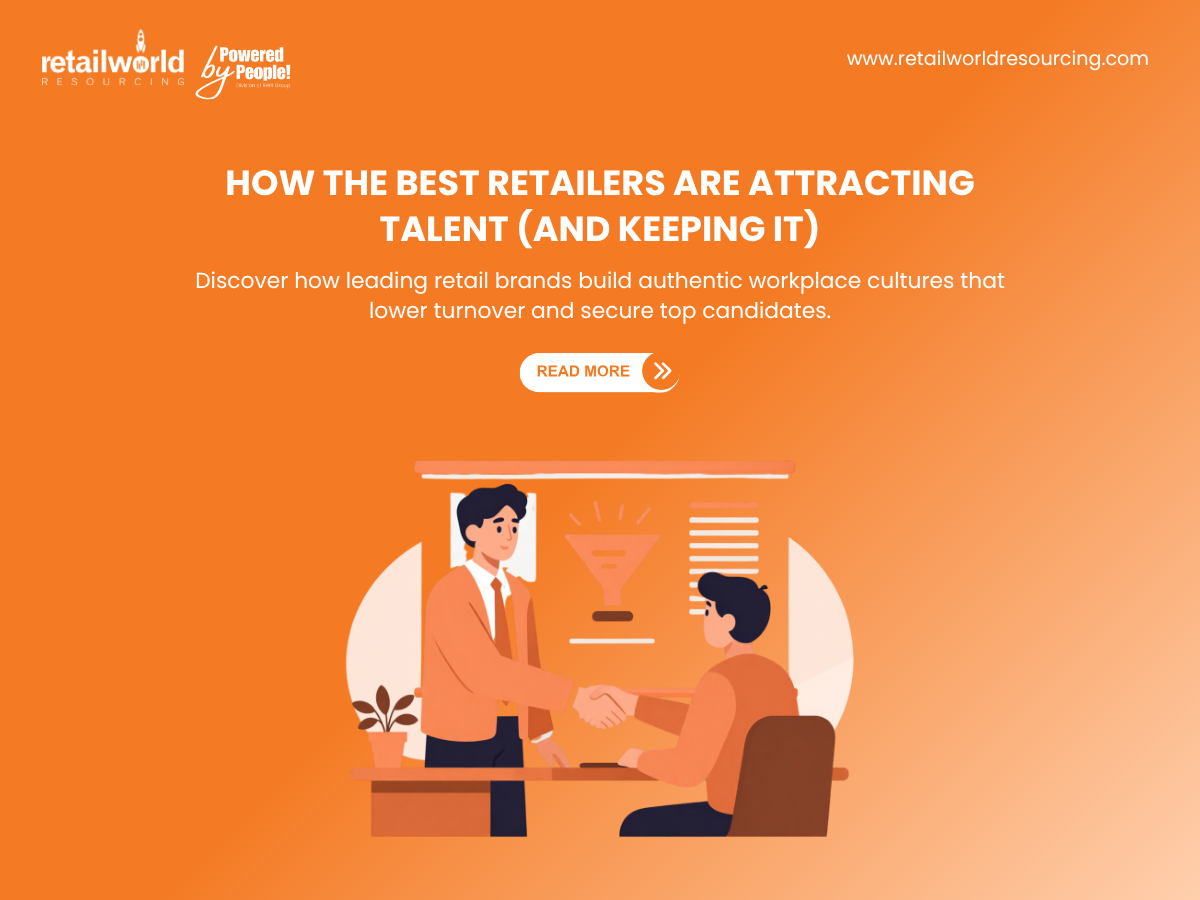
Discover how leading retail brands build authentic workplace cultures that lower turnover and secure top candidates.